Yoru Kaze: A Practical Evaluation of Japanese Brush Typography
In the crowded landscape of digital typography, finding a typeface that genuinely captures the spirit of traditional craftsmanship without sacrificing legibility is a significant challenge. Yoru Kaze emerges as a compelling solution for designers seeking to infuse their projects with the dynamic energy of Japanese calligraphy. Unlike generic script fonts that often rely on artificial curves and uniform strokes, Yoru Kaze mimics the natural variance found in ink flowing across paper. This distinction makes it more than just an aesthetic choice; it is a functional tool for conveying movement, elegance, and cultural depth in modern design contexts.
For professionals ranging from brand strategists to independent creators, understanding the specific utility of a font like Yoru Kaze is essential before integrating it into a workflow. While its visual appeal is immediate, its true value lies in how well it performs under real-world constraints. Whether used for high-end packaging, editorial headers, or digital marketing assets, this brush font offers a unique blend of artistic expression and structural integrity that warrants a closer look at its characteristics, limitations, and ideal applications.
The Essence of Calligraphic Design in Digital Media
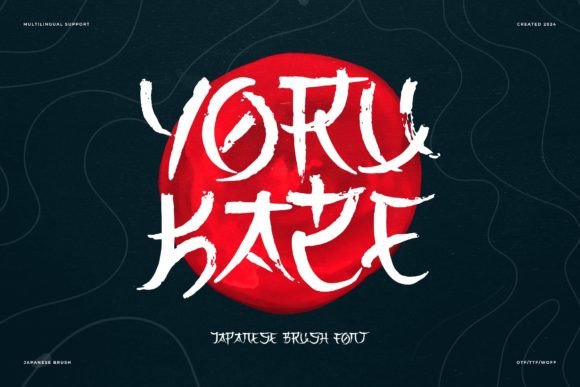
The defining characteristic of Yoru Kaze is its ability to replicate the texture and rhythm of a traditional sumi-e brush. In authentic Japanese calligraphy, known as Shodo, the pressure applied to the brush determines the thickness of the stroke, while the speed dictates the flow. Many digital attempts at this style fail because they smooth out these irregularities, resulting in a sterile, mechanical appearance. Yoru Kaze avoids this pitfall by incorporating deliberate variations in stroke width and subtle imperfections that suggest hand-crafted origins.
This attention to detail provides a sense of authenticity that resonates with audiences familiar with Asian aesthetics or those simply appreciating organic forms. When a designer selects Yoru Kaze, they are choosing a typeface that breathes. The bold, flowing nature of the letters creates a visual narrative of motion, making it particularly effective for headlines that need to command attention without shouting. It bridges the gap between ancient tradition and contemporary digital requirements, offering a sophisticated alternative to standard sans-serif or serif options that can feel overly rigid for creative campaigns.
Key Characteristics and Visual Strengths
Evaluating the technical aspects of Yoru Kaze reveals several strengths that contribute to its versatility. First and foremost is its bold weight. In a world where content competes for attention in milliseconds, a heavy, impactful presence is often necessary. Yoru Kaze delivers this through thick downstrokes and sweeping upstrokes that maintain clarity even at smaller sizes, provided the context allows for a display usage.
Another critical feature is the consistency of its character set. A common issue with brush fonts is erratic kerning or characters that look disjointed when placed together. Yoru Kaze maintains a cohesive rhythm across its alphabet, ensuring that words read smoothly rather than appearing as a collection of isolated symbols. This reliability is crucial for professional work where readability cannot be compromised for the sake of style.
- Dynamic Stroke Variation: The font naturally varies line thickness, simulating the pressure of a real brush.
- Cultural Authenticity: It adheres to the principles of Japanese brushwork, avoiding clichéd "Asian-inspired" stereotypes.
- Bold Presence: Designed to stand out, making it ideal for headlines, logos, and short phrases.
- Fluid Movement: The letterforms possess an inherent directionality that guides the eye across the text.
These characteristics make Yoru Kaze a robust choice for projects requiring a strong visual identity. However, its strength is also its limitation; the very details that give it life can become distracting if overused or applied to long-form text.
Real-World Performance and Usability
When moving from concept to execution, the usability of a font becomes the primary metric of success. In practical testing scenarios, Yoru Kaze excels in environments where brevity is key. It performs exceptionally well in logo design, where a single word or short phrase needs to convey a brand's personality instantly. For example, a tea house, a martial arts studio, or a boutique fashion label could leverage Yoru Kaze to establish an immediate connection with themes of tradition, discipline, or artisanal quality.
However, its performance drops significantly when applied to body copy. The intricate details and varying stroke widths, which are assets in a headline, create reading fatigue in paragraphs. The eye struggles to track lines of text where every character has a different visual weight and flow. Therefore, the recommendation for Yoru Kaze is strictly for display purposes. It should be paired with a clean, neutral sans-serif or a simple serif font for any supporting text to ensure the overall layout remains balanced and accessible.
From a technical standpoint, the font integrates smoothly into standard design software suites like Adobe Illustrator, Photoshop, and InDesign. Its vector-based structure ensures that it scales without losing resolution, a non-negotiable requirement for print production. Whether printing a large-format poster or a small business card, the crisp edges of the brush strokes remain intact, demonstrating the font's reliability across various output mediums.
Ideal Use Cases and Target Audience
Understanding who benefits most from Yoru Kaze helps streamline decision-making for project managers and creative directors. The font is particularly suited for industries that value heritage, artistry, and human touch. Professionals in the culinary sector, especially those focusing on Japanese cuisine or fusion dining, will find it invaluable for menu headers and branding materials. Similarly, wellness brands, yoga studios, and mindfulness apps can utilize its flowing nature to evoke a sense of calm and balance.
Marketers and entrepreneurs looking to differentiate their products in saturated markets may also find Yoru Kaze useful. In a sea of corporate, minimalist typography, a bold brush font can serve as a distinctive signature. It signals that a brand is not afraid to take risks and values creativity over convention. For freelancers and bloggers, using Yoru Kaze for featured images or social media graphics can increase engagement by breaking the monotony of standard web fonts.
Nevertheless, it is not a universal solution. Corporate sectors that prioritize strict adherence to minimalism, such as fintech or legal services, might find the style too expressive or informal. The decision to use Yoru Kaze should always align with the brand voice and the message being conveyed. If the goal is to communicate stability and precision through rigid geometry, this font is likely a poor fit. But if the objective is to inspire emotion and highlight cultural richness, it is a powerful asset.
Limitations and Strategic Considerations
While Yoru Kaze offers significant aesthetic value, a realistic evaluation must acknowledge its constraints. The primary limitation is legibility at reduced sizes. Due to the complexity of the brush strokes, the font requires ample white space to breathe. Crowding the characters or reducing them below a certain point size can result in the loss of detail, turning elegant strokes into muddy blobs. Designers must be mindful of minimum font size guidelines when implementing it in responsive web designs or mobile interfaces.
Furthermore, the cultural specificity of the font means it carries connotations that must be handled with care. Using a Japanese brush font for a product or service unrelated to Asian culture can sometimes appear appropriative or tone-deaf if not executed thoughtfully. It is essential that the usage respects the origin of the style and fits the context of the brand authentically. Blindly applying exotic-looking typefaces without understanding their cultural roots can undermine the professionalism of a project.
Finally, the learning curve for mastering the pairing of Yoru Kaze with other elements should not be underestimated. Because the font is so dominant, it demands a restrained approach to the rest of the design. Overusing textures, colors, or other decorative elements alongside Yoru Kaze can lead to visual chaos. Success lies in simplicity; letting the font be the hero of the composition while keeping the surrounding elements minimal.
Long-Term Value and Integration
Investing time in mastering a specialized font like Yoru Kaze offers long-term value for creatives building a diverse portfolio. As trends shift away from ultra-minimalism toward more expressive and human-centric design, the demand for authentic, hand-drawn styles is likely to grow. Having a reliable resource that captures this aesthetic without the need for custom illustration saves time and resources in the long run.
Moreover, the flexibility of Yoru Kaze allows it to adapt to various design challenges when used correctly. It can be manipulated with effects like layering, masking, or blending modes to create unique textures that further enhance its organic feel. For educators and publishers, it serves as an excellent teaching tool for discussing the intersection of technology and tradition in graphic design.
In conclusion, Yoru Kaze is a high-quality, purpose-driven typeface that brings the elegance of Japanese calligraphy to the digital realm. Its bold, flowing style makes it a standout choice for headlines, logos, and artistic projects where movement and culture are central themes. While it requires careful application regarding size, context, and pairing, its ability to convey emotion and authenticity makes it a valuable addition to any professional toolkit. By understanding its strengths and respecting its limitations, designers can leverage Yoru Kaze to create work that is not only visually striking but also deeply resonant with their intended audience.