Scary School: A Practical Evaluation of the Spooky Brush Typeface
In the realm of digital typography, few categories are as saturated yet distinct as seasonal display fonts. For designers tasked with creating Halloween campaigns, horror-themed book covers, or eerie event invitations, the search for a typeface that balances legibility with genuine atmosphere is often difficult. Scary School emerges as a notable contender in this niche. It is not merely a decorative font; it is a brush-style typeface designed with a specific aesthetic intent: to evoke the feeling of something hastily written in a haunted classroom or scrawled on a warning sign by someone who has seen too much. This evaluation examines the practical utility, design characteristics, and real-world application of Scary School for professionals and creators.
The Design Philosophy Behind Scary School
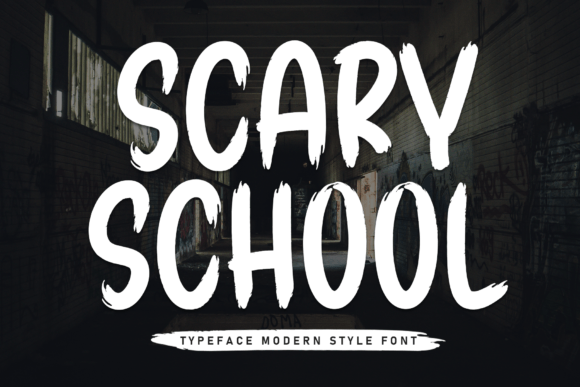
At its core, Scary School is defined by its rough, hand-drawn letterforms. Unlike geometric sans-serifs or rigid serifs, this font mimics the physical act of writing with a worn brush or a trembling hand. The "spooky twist" mentioned in its description is achieved through intentional imperfections. The strokes vary in thickness, edges appear frayed or uneven, and the baseline often shifts slightly, creating a sense of instability. These are not bugs; they are features designed to communicate unease.
For a professional designer, understanding the mechanics of this style is crucial. The font relies heavily on texture and weight variation to convey mood. When you select Scary School, you are choosing a visual language that suggests urgency, fear, or the supernatural. It avoids the polished, vector-perfect look of modern corporate branding in favor of an organic, almost tactile quality. This makes it particularly effective for projects where authenticity and emotional resonance are more important than strict uniformity.
Key Characteristics and Visual Impact
The visual impact of Scary School stems from several specific design choices that set it apart from generic "horror" fonts:
- Brush Dynamics: The strokes simulate the pressure changes of a real brush. Thick downstrokes contrast with thin upstrokes, adding rhythm and energy to the text.
- Irregular Baselines: Letters do not sit perfectly on a straight line. This slight wavering creates a subconscious feeling of movement or shaking, enhancing the chilling vibe.
- Textural Edges: The edges of the characters are rarely smooth. They feature jagged breaks and splatters that mimic ink drying on rough paper or wood.
- Character Consistency: Despite the chaotic appearance, the font maintains enough structural integrity to remain readable at moderate sizes, which is a common failure point in many novelty typefaces.
These characteristics make Scary School a versatile tool for establishing tone instantly. In a marketing campaign, seeing this font can signal to the audience that the content is related to Halloween, horror movies, or thriller genres before they even read a single word. The psychological association between the rough, handwritten style and the concept of danger or mystery is well-established, and this font leverages that effectively.
Real-World Performance and Usability
Evaluating a font requires looking beyond its static appearance to how it performs in actual workflows. In terms of usability, Scary School functions reliably within standard design software suites like Adobe Illustrator, Photoshop, and InDesign. It supports standard character sets, allowing for basic sentence construction without missing glyphs, which is essential for headlines and short copy blocks.
However, its performance varies depending on the scale of use. As a display font, it excels in large formats such as posters, billboards, social media graphics, and packaging. At these sizes, the intricate details of the brush strokes and the texture of the letters are visible and impactful. Conversely, using Scary School for body text or small captions is generally inadvisable. The irregular shapes and varying weights can reduce legibility when scaled down, potentially causing eye strain for the reader. Professionals should reserve this typeface for headlines, logos, and emphasis points rather than long-form reading material.
Flexibility is another strength. Because the font has a strong personality, it pairs well with cleaner, neutral typefaces. For example, pairing Scary School headers with a simple sans-serif body text creates a balanced hierarchy. The clean body text grounds the design, preventing the overall composition from becoming too chaotic or overwhelming. This combination allows the spooky element to stand out without sacrificing readability.
Quality, Consistency, and Long-Term Value
When assessing the quality of Scary School, one must consider the consistency of its execution. A high-quality brush font maintains a coherent style across all characters, ensuring that an 'A' looks like it belongs next to a 'Z'. In this regard, the font delivers a consistent aesthetic. The "hand-drawn" feel does not devolve into random noise; every glyph adheres to the same stylistic rules regarding stroke width and edge texture.
From a reliability standpoint, the font files are typically robust, minimizing issues with kerning or rendering glitches across different operating systems. For freelancers and agencies managing multiple client projects, this reliability is vital. There is no need for extensive manual adjustment or hinting work, allowing designers to integrate the font quickly into their production pipelines.
Regarding long-term value, Scary School offers a solid return on investment for those who frequently produce seasonal content. While it is primarily associated with Halloween, its underlying aesthetic—rough, urgent, and human—can be adapted for other themes. Think of true crime documentaries, survival guides, or edgy streetwear brands that want to project a raw, unpolished image. By expanding its use beyond October, creators can maximize the utility of the license over time.
Ideal Use Cases and Target Audience
Who benefits most from integrating Scary School into their toolkit? The primary beneficiaries include:
- Marketing Professionals: Those running seasonal campaigns for retail, entertainment, or hospitality sectors need fonts that grab attention quickly. This font serves as an immediate hook for Halloween promotions.
- Publishers and Book Designers: Authors of horror, mystery, or thriller novels require cover art that reflects the genre's tone. Scary School provides a perfect typographic solution for titles and chapter headings.
- Event Planners: Creators of invitations for haunted house tours, costume parties, or themed galas can use this font to set the mood before the guest even arrives.
- Freelance Graphic Designers: Professionals building portfolios need diverse assets. Having a reliable, high-quality spooky font ensures they can meet client requests for seasonal designs without scrambling for resources.
It is also worth noting the situations where this font might be less suitable. Corporate communications, formal reports, or any context requiring a sense of stability and trust should avoid Scary School. Its inherent chaos and "fright" factor can undermine messages intended to convey safety, precision, or professionalism. Understanding these boundaries is key to using the asset effectively.
Professional Recommendations and Limitations
While Scary School is a powerful asset, it is not a universal solution. One limitation is its potential for visual fatigue if overused. Because the font is so expressive, using it for every headline in a document can make the design feel cluttered and exhausting to read. The recommendation is to use it sparingly, treating it as an accent rather than a default choice.
Additionally, color choice plays a significant role in maximizing the font's effectiveness. While black and red are traditional pairings for horror themes, experimenting with muted greens, deep purples, or stark whites against dark backgrounds can yield fresh results. The rough texture of the letters interacts interestingly with gradients and overlays, offering opportunities for creative experimentation.
Finally, consider the licensing requirements carefully. As with any digital asset, ensure that the license covers your intended scope of work, whether it is for print, web, or merchandise. Using a font like Scary School in a commercial product without the proper rights can lead to legal complications that outweigh the creative benefits.
Conclusion
Scary School stands out as a competent and atmospheric option for designers seeking to inject a sense of dread and excitement into their work. Its rough, hand-drawn aesthetic successfully captures the essence of the spooky genre while maintaining enough structure to be usable in professional settings. By understanding its strengths, limitations, and ideal applications, creators can leverage this typeface to enhance their visual storytelling. Whether for a Halloween marketing blitz or a horror novel cover, Scary School provides the chilling vibe necessary to engage audiences and deliver a memorable message.