Kembar Display Font: A Practical Evaluation for Designers
In the crowded landscape of display typography, finding a typeface that balances whimsy with readability is often a challenge. Kembar and its companion, Meet Kembar, represent a specific niche within this category: fonts designed to inject charm and playfulness without sacrificing structural integrity. For designers aged 20 to 50 who are evaluating resources for brand identities, editorial projects, or marketing materials, understanding where Kembar fits in the broader typographic ecosystem is essential. This evaluation explores the distinct characteristics of the font family, compares it against general alternatives, and outlines the scenarios where it offers the most value.
Defining the Kembar Aesthetic
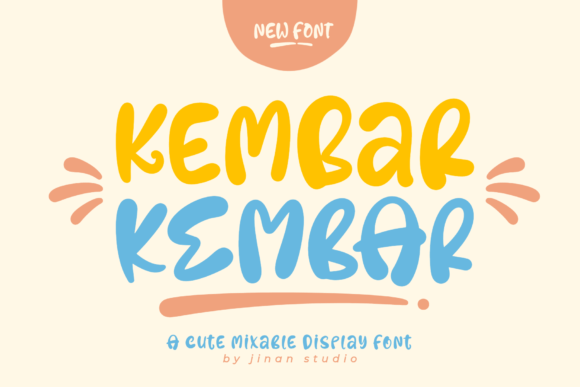
Kembar is fundamentally a display font characterized by rounded letterforms and an inherent sense of friendliness. Unlike standard serif or sans-serif families that prioritize neutrality, Kembar is engineered to evoke emotion. Its design language leans heavily into "delightfully whimsical" traits, utilizing soft curves and organic shapes to create a visual texture that feels warm and approachable. The inclusion of Meet Kembar expands this utility, offering variations that allow for more dynamic assembly within a single project.
What distinguishes Kembar from generic "cute" fonts is its flexibility. Many playful typefaces suffer from being one-note; they work well for a logo but fail when used in larger blocks of text or mixed with other elements. Kembar, however, invites users to mix, match, and assemble typography feats. This modularity suggests a design philosophy focused on versatility rather than static decoration. The rounded forms are not merely stylistic choices but functional ones, smoothing out the visual weight of the characters to ensure they remain legible even at smaller sizes compared to their more ornate peers.
Comparing Kembar to Standard Alternatives
When evaluating Kembar, it is useful to compare it against two primary categories of alternatives: rigid geometric sans-serifs and highly decorative script fonts. Geometric sans-serifs, such as Futura or Gotham, offer excellent clarity and modernity but often lack the emotional resonance required for children's books or spirited brand identities. They are utilitarian. In contrast, Kembar provides the necessary "friendly spark" that geometric fonts cannot achieve on their own.
On the other end of the spectrum lie highly decorative scripts and hand-lettered styles. While these options can be charming, they often struggle with consistency and scalability. A complex script might look stunning in a large headline but become illegible in a sub-header or body copy. Kembar occupies a middle ground. It retains the character of a hand-drawn style but adheres to a structured grid that ensures consistency across different applications. This makes it a stronger candidate for projects requiring multiple text sizes or varied weights, where purely decorative fonts would falter.
Furthermore, compared to standard rounded sans-serifs like VAG Rounded or Quicksand, Kembar offers a higher degree of personality. While those fonts are safe choices for UI design or corporate branding, they can sometimes feel generic. Kembar pushes further into the realm of character, making it a better fit for ventures that need to stand out as inventive or unique. The trade-off is that it may not suit contexts requiring strict formality or high-end luxury minimalism.
Strengths and Tradeoffs in Application
- Emotional Resonance: The primary strength of Kembar is its ability to instantly communicate warmth and amiability. It reduces the cognitive load on the viewer, making content feel less intimidating and more inviting.
- Modular Assembly: The ability to mix and match glyphs allows for creative poster designs and custom wordmarks that feel bespoke without requiring manual illustration.
- Readability vs. Style: While more readable than scripts, Kembar is still a display font. It should not be used for long-form body copy (such as novel chapters) where neutral typefaces are preferred for sustained reading comfort.
- Contextual Limitations: The playful nature of the font limits its use in serious industries like law, finance, or medical reporting, where trust is conveyed through sobriety rather than whimsy.
Ideal Use Cases for Kembar
The decision to adopt Kembar should be driven by the specific goals of the project. It excels in environments where the objective is to engage a younger audience or to soften the tone of a brand. Children's books are a natural fit; the rounded letterforms mimic the shapes often found in early literacy materials, making them intuitive for young readers. Similarly, educational apps and learning platforms benefit from the non-threatening aesthetic that Kembar provides.
Beyond children's media, Kembar is highly effective for spirited brand identities. Startups in the lifestyle, food, beverage, or creative sectors often seek to differentiate themselves from established, staid competitors. Using Kembar in a logo or packaging design signals innovation and approachability. For instance, a local bakery or a toy store can leverage the font to create a visual identity that feels handmade and personal, fostering a stronger connection with customers.
Posters and event invitations also represent a strong use case. The font's capacity for "unparalleled" typography feats means it can handle bold headlines and eye-catching layouts without looking cluttered. When designing an invitation for a community festival, a birthday party, or a creative workshop, Kembar transforms the ordinary text into an extraordinary visual element that sets the mood before the reader even processes the details.
When to Consider Other Options
Despite its strengths, Kembar is not a universal solution. There are clear situations where selecting an alternative is the prudent choice. If the project requires a high volume of text—such as a white paper, a legal contract, or a news article—Kembar should be avoided. Display fonts generally cause eye fatigue over long paragraphs due to their distinctive shapes and varying stroke widths. In these cases, a neutral serif or sans-serif remains the industry standard for readability.
Additionally, if the brand positioning relies on exclusivity, heritage, or extreme minimalism, Kembar may send the wrong message. Luxury fashion brands or high-end architectural firms typically utilize sharp, angular, or classic serif fonts to convey precision and sophistication. The "warm and amiable touch" of Kembar could undermine the perceived value or seriousness of such entities.
Designers must also consider the digital environment. While Kembar works well in print and large-screen displays, its intricate details may require careful testing on mobile devices with low-resolution screens. If a project involves micro-copy in a user interface where space is limited and clarity is paramount, a simpler system font or a dedicated UI typeface might be more appropriate.
Decision Factors for Selection
Before integrating Kembar into a workflow, evaluate the following factors to ensure it aligns with your project requirements:
- Tone Alignment: Does the brand voice require playfulness? If the answer is no, the font will likely feel out of place.
- Hierarchy Needs: Can the font support the necessary hierarchy? Kembar is best suited for headings, titles, and short calls to action rather than continuous text.
- Audience Expectations: Will the target demographic respond positively to a whimsical aesthetic? For adult audiences seeking efficiency, a more traditional font may perform better.
- Technical Constraints: Are there licensing or file size limitations? Ensure that the specific version of Kembar or Meet Kembar you choose meets the technical specifications of your production pipeline.
Ultimately, the choice between Kembar and other typefaces comes down to the narrative you wish to tell. If the goal is to transform the ordinary into something extraordinary, adding a layer of enchantment to a design, Kembar offers a robust toolkit. However, if the priority is pure function or formal authority, exploring alternatives within the neutral or classic categories is advisable. By weighing these practical considerations, designers can make informed decisions that enhance their work without relying on trends alone.