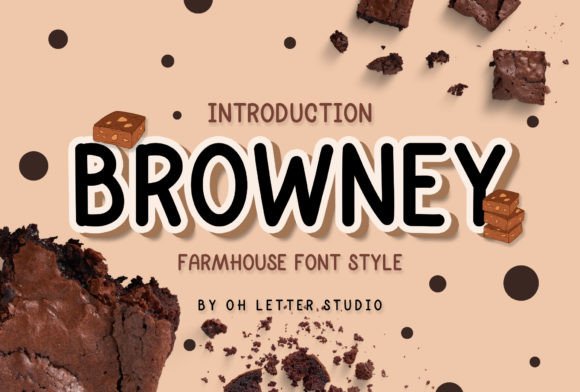
Browney: A Practical Evaluation of a Sweet and Striking Display Font
In the landscape of digital typography, finding a typeface that balances approachability with visual impact is often a challenge. Designers frequently encounter fonts that are either too rigid for creative projects or too whimsical to convey professionalism. Browney occupies a unique niche in this spectrum, offering a distinct blend of boldness, neatness, and sweetness. This article evaluates the characteristics of Browney, explores its practical applications, and compares it against other typographic approaches to help you determine if it fits your specific design needs.
Defining the Browney Aesthetic
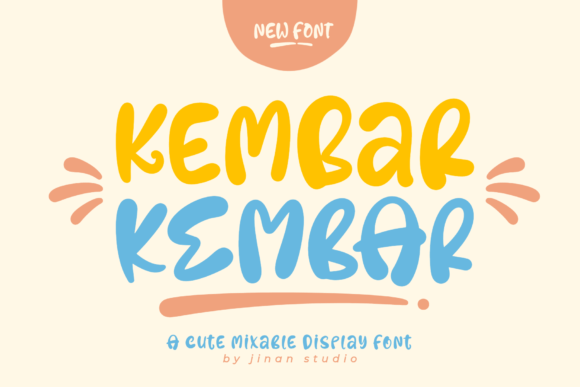
Browney is not merely a decorative font; it is a character-driven display typeface designed to evoke specific sensory responses. Visually, it presents as bold and striking, yet retains a rounded softness that suggests cuteness and warmth. The letterforms are constructed to look neat and organized, avoiding the chaotic feel often associated with "cute" or "hand-drawn" styles. This structural integrity allows Browney to remain legible even at smaller sizes, while its inherent playfulness makes it instantly recognizable.
The primary emotional resonance of Browney is one of deliciousness and comfort. When applied to text, the font naturally suggests themes of snacks, desserts, and treats. This is achieved through subtle curves and a weight distribution that mimics the texture of soft, sweet foods. For designers working in the food and beverage sector, or those targeting a demographic that values warmth and friendliness, Browney provides an immediate visual shorthand for quality and enjoyment.
Distinctive Features and Flexibility
- Bold Weight: The heavy stroke width ensures high visibility, making it ideal for headlines and short phrases where impact is required.
- Rounded Geometry: Soft edges reduce visual aggression, creating an inviting atmosphere suitable for both children's products and adult-oriented lifestyle brands.
- Neat Alignment: Unlike many playful fonts that suffer from inconsistent spacing, Browney maintains a clean baseline, facilitating easier layout integration.
- Versatile Pairing: Its strong personality allows it to stand alone or pair effectively with simpler sans-serif fonts for body text.
Comparing Browney to Alternative Typographic Styles
When selecting a font, it is essential to understand how Browney differs from other common categories. While there are numerous "sweet" or "bubble" fonts available, Browney distinguishes itself through its balance of structure and whimsy. Many alternatives in this category lean heavily into the cartoonish, resulting in typefaces that can appear juvenile or difficult to read in professional contexts. In contrast, Browney retains a level of sophistication that prevents it from feeling childish.
Consider the comparison between Browney and standard geometric sans-serifs. Geometric fonts offer clarity and neutrality but often lack the emotional connection required for branding focused on joy or indulgence. Conversely, highly stylized script fonts may convey elegance or personal touch but often sacrifice legibility and boldness. Browney bridges this gap by offering the readability of a sans-serif with the emotional warmth of a custom illustration.
For projects requiring a "crafty" or DIY aesthetic, hand-lettered fonts are a popular alternative. However, these often come with limited character sets and irregular spacing that can complicate automated typesetting. Browney provides the organic feel of hand-crafted work but with the consistency and flexibility of a digital typeface. This makes it a more reliable choice for production environments where scalability and uniformity are critical.
Ideal Use Cases and Strategic Applications
The versatility of Browney makes it suitable for a wide range of design scenarios, particularly those where the goal is to attract attention and evoke positive feelings. Its strength lies in its ability to transform simple words into visual treats.
Branding and Logo Design
For startups and small businesses, especially those in the food, retail, or creative industries, Browney serves as an excellent foundation for logo design. Because the font is bold and striking, it creates a memorable mark without needing excessive graphical embellishment. A bakery, a craft coffee shop, or a boutique toy store can leverage Browney to communicate their brand identity instantly. The font's "neat" quality ensures that the logo remains professional enough for business cards and signage, while its "cute" nature appeals directly to the target audience.
Packaging and Product Labels
Packaging design relies heavily on typography to influence purchasing decisions. Browney excels here, particularly for products related to snacks and desserts. When combined with imagery of cookies, candies, or fresh pastries, the font reinforces the product's appeal. It works well for short names and taglines, allowing the product name to pop off the shelf. Designers should note that due to its bold weight, Browney is best used for titles rather than long ingredient lists or legal disclaimers, which require higher density and smaller weights.
Digital Media and Social Graphics
In the realm of social media, where visual competition is fierce, Browney offers a distinct advantage. Its striking appearance helps posts stand out in crowded feeds. Whether designing Instagram stories, promotional banners, or YouTube thumbnails, the font's flexibility allows for creative manipulation. It pairs exceptionally well with vibrant colors and high-quality photography, enhancing the overall aesthetic of digital campaigns aimed at engaging users quickly.
Evaluating Limitations and Tradeoffs
While Browney offers significant benefits, it is not a universal solution for every design problem. Understanding its limitations is crucial for making an informed decision. The most notable tradeoff is its suitability for extended text. As a display font, Browney is optimized for headlines, logos, and short phrases. Using it for paragraphs or body copy can lead to reduced readability and visual fatigue due to its heavy weight and distinctive shapes.
Furthermore, the "sweet" and "cute" connotation of the font may not align with all brand identities. For industries such as finance, law, or high-tech engineering, the playful nature of Browney might undermine the desired perception of seriousness and authority. In these contexts, a more neutral or traditional typeface would be a more appropriate choice. Designers must carefully evaluate whether the emotional tone of Browney supports the core message of their project.
Another consideration is the potential for overuse. Because the font is so expressive, relying on it exclusively throughout a design system can become visually monotonous. To maintain balance, it is advisable to use Browney as an accent or headline font, pairing it with a complementary sans-serif or serif for supporting text. This approach leverages the strengths of Browney while ensuring the overall design remains functional and readable.
Decision Factors: When to Choose Browney
Choosing the right font involves weighing specific project requirements against the capabilities of the typeface. Browney is likely the right choice if your project requires a friendly, approachable, and visually impactful voice. It is particularly effective when the goal is to highlight concepts of enjoyment, creativity, or indulgence.
If you are working on a project involving kids' themes, crafty DIY tutorials, or any content that benefits from a warm, human touch, Browney provides a robust toolkit. Its flexibility allows for creative experimentation, enabling designers to customize layouts without losing the font's core identity. Additionally, if you need a font that looks great when paired with rich imagery—such as photos of food, colorful crafts, or vibrant illustrations—Browney will enhance the visual narrative rather than compete with it.
However, if your priority is maximum information density, formal communication, or a minimalist aesthetic that avoids emotional cues, you may need to explore other options. In these cases, a standard grotesque or a classic serif might serve your needs better. Ultimately, the decision to use Browney should be driven by the specific emotional and functional goals of your design. By understanding its unique blend of boldness and sweetness, you can leverage its potential to create designs that are not only visually striking but also deeply resonant with your audience.