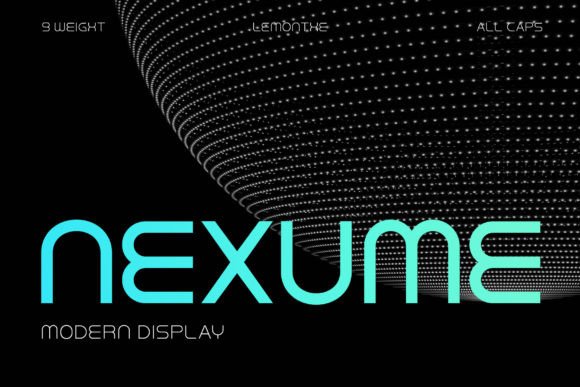
Nexume: A Futuristic Display Font for Modern Design
In the crowded landscape of digital communication, the first thing an audience notices is often not the message itself, but the visual container holding it. Typography acts as the silent ambassador of your brand, setting the tone before a single word is read. For designers and creators seeking to project innovation, clarity, and forward-thinking aesthetics, Nexume offers a compelling solution. This modern display font bridges the gap between sleek minimalism and futuristic flair, providing a versatile toolset for professionals who need their work to stand out without sacrificing readability.
Whether you are crafting a logo for a tech startup, designing a headline for a high-impact blog post, or creating assets for social media, the choice of typeface can significantly influence how your content is perceived. Nexume is engineered with smooth curves and a clean architecture that resonates with contemporary design trends. It is not merely a decorative element; it is a functional asset designed to enhance communication efficiency and visual appeal across various platforms.
The Intersection of Minimalism and Future Aesthetics
At its core, Nexume embodies a specific design philosophy: the fusion of clean lines with a futuristic sensibility. In recent years, the design world has shifted away from overly ornate details toward a more streamlined approach. However, pure minimalism can sometimes feel sterile or generic. Nexume addresses this by introducing subtle, organic curves that soften the rigid edges often associated with modern sans-serif fonts. These smooth transitions create a sense of motion and fluidity, suggesting progress and dynamism.
This aesthetic is particularly valuable for industries positioned at the forefront of innovation. Consider a software company launching a new AI platform. Using a traditional serif font might convey stability but could fail to communicate cutting-edge technology. Conversely, a chaotic, overly stylized script might appear unprofessional. Nexume strikes a balance, offering a look that feels advanced yet grounded. The minimalist design ensures that the text remains legible even at smaller sizes, while the futuristic styling captures attention in large formats like posters or website hero sections.
For entrepreneurs and small business owners, adopting a font like Nexume can be a strategic move to align their visual identity with market expectations. Consumers aged 20 to 50, who are digitally native and accustomed to high-quality interfaces, often associate clean, modern typography with reliability and competence. By integrating Nexume into your branding, you signal that your organization is current and attentive to detail.
Strategic Applications in Branding and Logos
One of the most critical applications for any display font is logo design. A logo must be memorable, scalable, and representative of the brand's essence. Nexume excels in this area due to its distinct character shapes and balanced proportions. The smooth curves provide a unique fingerprint that helps a logo distinguish itself in a saturated market.
When designing a logo, flexibility is paramount. You may need a bold version for a mobile app icon and a lighter weight for letterhead stationery. Nexume offers nine varying font weights, which provides an extensive range of options within a single family. This variety allows designers to create hierarchical structures within a logo lockup without needing to mix different typefaces, ensuring visual harmony. For instance, a fintech startup might use the boldest weight of Nexume for the company name to project strength, paired with a medium weight for the tagline to maintain approachability.
Furthermore, the futuristic style of Nexume makes it an excellent choice for rebranding efforts where a company wishes to pivot its image toward modernization. If a legacy business wants to shed an outdated appearance and attract a younger demographic, switching to a typeface like Nexume can instantly refresh the brand's perception without requiring a complete overhaul of the color palette or messaging strategy.
Enhancing Digital Media and Headlines
Beyond static logos, the digital realm demands typography that performs well on screens of all sizes. From smartphones to desktop monitors, readability is non-negotiable. Nexume is optimized for digital media, ensuring that characters remain crisp and clear even when rendered on lower-resolution displays. The open counters and generous spacing prevent letters from merging together, a common issue with many display fonts when used in body copy or dense headlines.
For bloggers, marketers, and content creators, headlines are the primary hook. They determine whether a reader clicks through or scrolls past. A headline set in Nexume benefits from its strong presence and clean geometry. The font commands attention without shouting, allowing the content's value proposition to shine. Marketers can leverage the different weights to create emphasis within a single headline, perhaps using a heavy weight for key keywords and a regular weight for the rest of the sentence. This technique guides the reader's eye and improves information retention.
In the context of social media graphics, where space is limited and competition for attention is fierce, Nexume's versatility becomes a significant advantage. Whether designing an Instagram story, a Twitter header, or a LinkedIn banner, the font adapts seamlessly. Its minimalist nature ensures that it does not clash with other visual elements like images or icons, maintaining a cohesive composition. Educators and publishers can also utilize Nexume for digital course materials or e-books, where a modern, engaging typeface can help keep learners focused and reduce visual fatigue.
Streamlining Workflow with Nine Font Weights
A major practical benefit of Nexume is the inclusion of nine distinct font weights. In professional design workflows, having access to a comprehensive range of weights simplifies decision-making and accelerates production time. Instead of searching for complementary fonts to create contrast, a designer can rely entirely on the Nexume family. This consistency reduces the risk of typographic clashes and ensures a unified visual language across all project deliverables.
Consider a scenario where a freelancer is creating a full suite of marketing materials for a client, including a poster, a business card, and a website mockup. With a limited font family, they might struggle to find enough variation to differentiate headings from subheadings effectively. With Nexume, they can assign specific weights to specific roles—perhaps using 'Black' for main titles, 'Bold' for section headers, and 'Light' for captions. This systematic approach not only looks professional but also streamlines the editing process. If the client requests a change in hierarchy, the designer can simply adjust the weight rather than swapping out entire fonts.
Moreover, the availability of multiple weights supports accessibility. Users with visual impairments often benefit from higher contrast and bolder typefaces. By having heavier weights readily available, designers can ensure that their projects meet accessibility standards without compromising the overall aesthetic. This consideration is increasingly important for businesses aiming to reach a wider, inclusive audience.
Who Benefits Most from Nexume?
While Nexume is a versatile tool, certain groups will find its specific characteristics particularly advantageous. Tech startups and SaaS companies are natural fits, given the font's futuristic undertones. Similarly, creative agencies working on digital products will appreciate the clean, modern look that complements UI/UX design principles. Freelancers and hobbyists looking to elevate their portfolio projects can also leverage Nexume to give their work a polished, professional finish that rivals agency-level output.
However, it is important to recognize where Nexume might not be the best fit. As a display font, it is primarily intended for headlines, logos, and short bursts of text. While it is readable, it may not be ideal for long-form body copy in printed books or academic papers, where traditional serif or highly legible sans-serif fonts are preferred. Users should compare options if their primary requirement is extended reading comfort over large blocks of text. Additionally, brands with a heritage focus or those targeting a strictly traditional demographic might find the futuristic style too avant-garde.
Ultimately, the value of Nexume lies in its ability to solve specific design problems related to modernity, clarity, and flexibility. It empowers creators to make bold statements while maintaining a structured, professional appearance. By understanding its strengths and limitations, designers can deploy Nexume strategically to enhance their projects, save time on asset creation, and deliver results that resonate with today's audiences. In a world where visual communication is key, choosing the right tool like Nexume can be the difference between blending in and standing out.