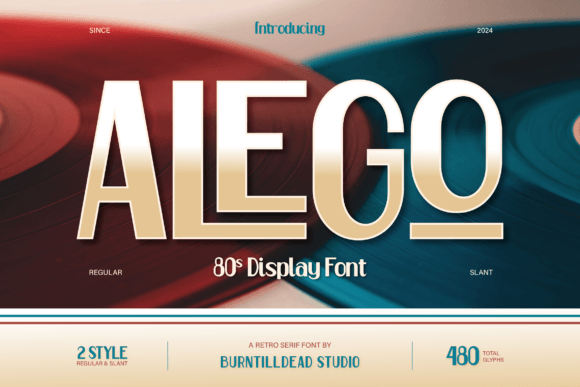
Introducing Alego: Where Nostalgic Charm Meets Modern Minimalism
In the rapidly evolving landscape of digital design, there is a persistent tension between the need for futuristic innovation and the comfort of familiar aesthetics. Designers and brand strategists are increasingly looking for tools that bridge this gap, offering a visual language that feels both fresh and timelessly grounded. This is where Alego enters the conversation. Introducing Alego, our display retro font with delightful sans serif motifs, marks a significant step forward in typography that respects the past while serving the future. Characterized by bold, simple, minimalist, and nostalgic elements, this typeface is not merely a collection of glyphs; it is a strategic asset for creating eye-catching headlines, logos, posters, and any design that requires a sense of nostalgia and timeless style.
The resurgence of retro aesthetics is not a fleeting trend but a fundamental shift in consumer psychology. As technology accelerates, audiences crave authenticity and warmth—qualities often associated with mid-century modernism and vintage graphic design. However, simply copying old styles rarely works in a contemporary context. The challenge lies in adapting these historical references to meet current usability standards and screen readability requirements. Alego addresses this challenge directly, offering a sophisticated synthesis of eras that resonates with professionals, creators, entrepreneurs, and marketers alike.
The Philosophy Behind the Typeface
At its core, Alego is designed to communicate confidence and approachability simultaneously. In an era where attention spans are shortening, a headline must do more than just inform; it must arrest the viewer's gaze immediately. The bold strokes of Alego ensure high visibility across various media, from massive outdoor billboards to compact mobile interfaces. Yet, what sets it apart from other heavy display fonts is its underlying simplicity. By stripping away unnecessary ornamentation, the font retains a clean, minimalist structure that prevents visual clutter.
This balance is crucial for modern branding. A logo that is too ornate can appear dated or difficult to scale, while one that is too stark may feel cold or impersonal. Alego navigates this middle ground with precision. Its sans serif motifs provide a geometric foundation, ensuring legibility, while subtle curves and weight variations inject a human touch. This duality allows brands to project stability and reliability without sacrificing personality. For freelancers and agencies working on diverse client portfolios, having a versatile tool like this reduces the friction of the creative process, allowing for faster iteration and stronger conceptual execution.
Why Nostalgia Matters in the Digital Age
To understand why people are paying such close attention to fonts like Alego, we must examine the broader cultural zeitgeist. We are currently witnessing a "retro-futurism" movement where the optimism of the 1950s and 60s is being reimagined through a modern lens. Consumers are drawn to brands that evoke a sense of heritage and continuity, even if those brands are entirely new. This phenomenon is driven by a desire for grounding in an uncertain world.
When a marketer chooses Alego for a campaign, they are tapping into this emotional reservoir. The font signals that the brand values tradition, quality, and human connection. It suggests a story that has been told before but is now being retold with new relevance. This is particularly effective in industries such as lifestyle, food and beverage, and sustainable technology, where trust and community are paramount. By utilizing a typeface that feels familiar yet distinct, businesses can differentiate themselves in crowded marketplaces without resorting to aggressive or gimmicky tactics.
Adapting to Changing Workflows and Expectations
The demands placed on typography have shifted dramatically alongside technological advancements. Ten years ago, a designer might have focused primarily on print resolution. Today, the same font must perform flawlessly on OLED screens, within augmented reality overlays, and across variable web environments. The changing needs of workflows require typefaces that are robust enough to handle these diverse applications without losing their character.
Alego was developed with these constraints in mind. Its minimalist nature ensures that it scales effectively, maintaining its integrity whether used at 12 points for a caption or 100 points for a hero image. This versatility is a game-changer for entrepreneurs who manage their own branding assets. Instead of licensing multiple fonts for different use cases, a single, well-engineered family like Alego can serve as the backbone of a cohesive visual identity system.
- Consistency Across Channels: From social media graphics to packaging, the font maintains a unified voice, reinforcing brand recognition.
- Speed of Execution: The clear, bold forms allow for rapid mock-up creation, enabling teams to test concepts quickly.
- Accessibility: The high contrast and open counters improve readability for users with visual impairments, aligning with modern inclusivity standards.
Furthermore, the expectations of the audience have evolved. Users are more visually literate than ever before; they can spot generic, overused stock imagery and cliché typography instantly. They demand originality and thoughtfulness. When a creator uses Alego, they are signaling a commitment to quality and curation. It shows that the design decisions were intentional, moving beyond the default settings of standard software suites to craft a unique aesthetic experience.
Practical Applications in Modern Branding
The true power of Alego becomes evident when observing its application in real-world scenarios. Consider the launch of a new eco-friendly apparel line. The brand wants to convey sustainability (future-focused) but also durability and classic style (timeless). Using a thin, ultra-modern sans serif might feel too clinical. Conversely, a heavy script font could imply fragility. Alego, with its bold yet simple forms, offers the perfect solution. It anchors the brand in a sense of established quality while remaining sleek enough to appeal to a younger demographic.
Similarly, in the tech sector, startups often struggle to appear innovative without feeling sterile. A poster series for a fintech conference using Alego for headlines can create an immediate sense of excitement and approachability. The nostalgic elements soften the hard edges of financial data, making complex topics feel more accessible to the general public. This ability to humanize technology is a critical skill for modern communicators, and the right typography is often the first step in achieving that connection.
- Headlines and Titles: Use the bolder weights of Alego to command attention in editorial layouts and landing pages.
- Logo Design: Leverage the distinctive letterforms to create memorable wordmarks that stand out in app stores and directories.
- Merchandise and Packaging: Apply the font to physical products to give them a premium, collectible feel that encourages unboxing experiences.
Connecting to Larger Industry Developments
The rise of fonts like Alego reflects a larger development in the creative industry: the move away from rigid minimalism toward "warm minimalism." For years, the dominant design language was characterized by extreme reduction, often resulting in interfaces and brands that felt soulless. Now, there is a correction occurring. Designers are reintroducing texture, color, and personality back into their work, but doing so with restraint.
This shift is supported by advancements in variable font technology and better rendering engines, which allow for more nuanced expression without compromising performance. Alego fits squarely into this evolution. It acknowledges the necessity of clean lines for digital clarity but refuses to abandon the expressive potential of retro design. It represents a mature understanding of how form follows function in a world where emotion drives engagement.
For the professional designer, staying ahead of these trends means curating a toolkit that includes resources capable of expressing this nuance. Relying solely on ubiquitous system fonts limits the scope of creativity. Integrating specialized typefaces like Alego into your workflow demonstrates a proactive approach to design challenges. It shows an awareness of market dynamics and a willingness to experiment with visual languages that resonate deeply with current cultural sentiments.
Future-Proofing Your Visual Identity
As we look toward the future, the importance of timeless style cannot be overstated. Trends come and go, but good design endures. Fonts that rely too heavily on specific stylistic fads risk becoming obsolete within a few years, necessitating costly rebrands. Alego, however, is built on principles that transcend temporary fashions. Its combination of boldness and simplicity ensures that it will remain relevant as long as the appreciation for clear, impactful communication persists.
By choosing a typeface that balances nostalgia with modern utility, businesses and creators invest in a visual identity that can grow with them. Whether you are launching a startup, rebranding an established corporation, or designing a personal portfolio, the decision to incorporate Alego is a decision to prioritize longevity and impact. It is a testament to the belief that the best design does not shout for attention but invites the viewer in, telling a story that feels both new and comfortably familiar.
In conclusion, Alego is more than just a font; it is a response to the complex needs of the modern creative economy. It offers a pathway to connect with audiences on an emotional level while maintaining the technical rigor required for today's digital ecosystems. For anyone looking to elevate their work with a touch of retro charm and a dose of modern efficiency, Alego stands ready to define the next chapter of visual storytelling.