Hevilla: Reimagining the Y2K Aesthetic for Modern Digital Branding
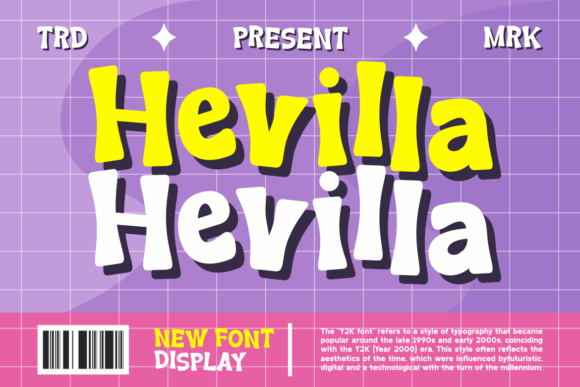
In the rapidly evolving landscape of digital design, few movements have captured the collective imagination quite like the resurgence of early 2000s culture. As professionals and creators look to differentiate their brands in a saturated market, they are increasingly turning to nostalgia not as a retreat, but as a forward-looking strategy. At the forefront of this visual renaissance is Hevilla, a new product designed specifically to bridge the gap between retro-futurism and contemporary utility. Introducing our new product Hevilla - Y2k Display marks a significant moment for designers seeking to incorporate the distinct energy of the turn of the millennium into modern workflows.
The digital world has come full circle. What was once considered clunky, pixelated, or obsolete is now viewed through a lens of authenticity and charm. Hevilla is more than just a typeface; it is a visual representation of the Y2K aesthetic, meticulously crafted to evoke the futuristic style, technology, and digital elements that defined the early 2000s. By incorporating elements such as old computer displays, pixels, neon glows, and geometric shapes, this font captures the technological optimism of a time when the internet felt like a boundless frontier.
The Architecture of Nostalgia: Understanding Hevilla
To understand why Hevilla resonates so deeply with today's creative class, one must first appreciate the specific visual language it employs. The Y2K era was characterized by a unique blend of high-tech aspirations and low-resolution realities. Designers were working within strict technical constraints, resulting in bold, blocky typography and vibrant, often clashing color palettes. Hevilla honors these constraints while refining them for high-definition screens and print media.
This font incorporates the essence of old computer displays, mimicking the scan lines and slight blurring effects of CRT monitors. It utilizes pixels not as a limitation, but as a stylistic choice that adds texture and depth to headlines and logos. Furthermore, the inclusion of neon accents and sharp geometric shapes reflects the cyberpunk and sci-fi influences that permeated pop culture during the dot-com boom. These are not random decorations; they are deliberate references to the technological developments of the time, recontextualized for a modern audience that craves tactile digital experiences.
Beyond the Retro Trend: Market Relevance
While trends often come and go, the return of Y2K aesthetics represents a fundamental shift in consumer psychology. For professionals, marketers, and entrepreneurs, adopting a style like Hevilla is a strategic move. In an era dominated by minimalist flat design and sterile corporate interfaces, the boldness of Y2K stands out. It signals playfulness, innovation, and a willingness to break conventions.
Consider the current state of the tech industry. We are surrounded by seamless, invisible interfaces. However, there is a growing fatigue with perfection. Consumers are beginning to value "imperfect" digital artifacts that feel human-made. Hevilla fits perfectly into this broader industry trend. It allows brands to communicate a sense of history and continuity, connecting the digital pioneers of the past with the innovators of today. Whether used in a startup pitch deck, a fashion campaign, or a software interface, this font immediately establishes a tone that is both nostalgic and cutting-edge.
Changing Workflows and Creative Expectations
The adoption of Hevilla also speaks to changing needs and preferences in creative workflows. Designers are no longer satisfied with generic sans-serif fonts that work everywhere but say nothing. They require tools that carry inherent meaning and narrative weight. When a creator selects Hevilla, they are making a statement about their brand's identity before a single word is read.
For freelancers and agencies, the ability to quickly evoke a specific era can be a competitive advantage. The versatility of Hevilla allows it to function effectively across various mediums:
- Digital Marketing Campaigns: Headlines using this font can grab attention on social media feeds cluttered with standard typography, increasing click-through rates among Gen Z and Millennial audiences.
- Product Packaging: In the physical realm, the geometric and pixelated nature of the font translates well to packaging design, suggesting a product that is tech-forward yet grounded in fun.
- Web Design: As websites become more interactive, Hevilla serves as an excellent display type for hero sections, setting the stage for dynamic animations and hover effects.
Moreover, the integration of Hevilla into modern design systems demonstrates how legacy aesthetics can coexist with current technology. It challenges the notion that "retro" means "outdated." Instead, it proves that historical styles can be leveraged to create fresh, engaging experiences. This aligns with the broader expectation that brands should be culturally aware and capable of speaking multiple visual languages.
Practical Applications for Entrepreneurs and Marketers
How does this translate into practical business outcomes? Let us consider a hypothetical scenario involving a fintech startup targeting young adults. Traditional financial branding relies on trust, stability, and conservatism—often conveyed through blue colors and serif fonts. However, a new generation of users expects finance to be accessible, transparent, and even entertaining.
By utilizing Hevilla for key call-to-action buttons or app headers, this startup could instantly signal that they are different from legacy banks. The neon and pixel elements suggest a platform built for the digital native, one that understands the language of the internet. It creates an emotional connection based on shared cultural touchstones, reducing the friction of user acquisition.
Similarly, lifestyle brands and fashion retailers are leveraging this aesthetic to tap into the cyclical nature of style. The Y2K era was a time of experimentation with materials and forms, much like the current sustainability movement which encourages repurposing and reimagining. Hevilla provides the typographic anchor for these narratives, allowing brands to tell stories of reinvention and resilience.
Connecting to Larger Technological Developments
The rise of Hevilla cannot be viewed in isolation from larger technological developments. We are currently witnessing the dawn of the spatial computing era, where digital content overlays the physical world. In this context, the distinction between "real" and "digital" becomes blurred. The aesthetic of the early 2000s, with its explicit acknowledgment of the digital medium (scan lines, pixels, wireframes), feels strangely prescient for this new reality.
As we move towards augmented reality (AR) and virtual environments, the need for typography that acknowledges its own artificiality becomes paramount. Hevilla, with its roots in the visual language of early computer displays, is uniquely positioned to thrive in these spaces. It does not try to hide behind photorealism; instead, it embraces the constructed nature of the digital environment. This makes it a forward-looking choice for creators building the next generation of immersive experiences.
Furthermore, the open-source and collaborative spirit of the early internet is being revived in the Web3 and decentralized technology sectors. Hevilla resonates with this ethos, serving as a visual shorthand for community, openness, and the democratization of information. It reminds users of the time when the internet belonged to everyone, fostering a sense of belonging that is crucial for modern online communities.
Why People Are Paying Attention
Ultimately, the attention surrounding Hevilla stems from a desire for authenticity in a synthetic world. In a market flooded with AI-generated content and algorithmic curation, there is a hunger for designs that feel intentional and human. Hevilla offers a tangible connection to a specific moment in time, grounding digital interactions in a shared history.
Professionals are paying attention because they recognize the power of storytelling through typography. They see that Hevilla is not merely a font but a tool for differentiation. In a crowded marketplace, standing out is essential, and the bold, geometric, and neon-infused style of this Y2K display font provides a clear path to visibility.
As we continue to navigate the complexities of the digital age, the lessons of the past remain invaluable. Hevilla encapsulates the optimism, curiosity, and creativity of the early 2000s, translating them into a visual language that is ready for the future. For creators, entrepreneurs, and enthusiasts alike, embracing this aesthetic is not about looking backward; it is about finding new ways to move forward with confidence and style.
The journey of Hevilla from concept to product illustrates the enduring power of design to shape perception and influence behavior. As more brands integrate this unique visual identity into their strategies, we can expect to see a continued evolution of the Y2K aesthetic, ensuring that the spirit of the millennium remains a vibrant part of our digital present.