Ringgok: A Bold Display Font for Modern Branding
In the crowded landscape of digital typography, finding a typeface that balances immediate visual impact with genuine versatility is a persistent challenge for designers and brand managers. Ringgok emerges as a compelling solution to this problem, offering a bold and authentic display aesthetic that cuts through the noise without relying on gimmicks. As a modern font designed for high-impact applications, it serves as a robust tool for professionals who need their visual identity to communicate strength and clarity instantly. Whether you are crafting a logo, designing merchandise, or establishing a cohesive brand voice, understanding the specific utility of Ringgok can significantly streamline your creative workflow.
The Design Philosophy Behind Ringgok
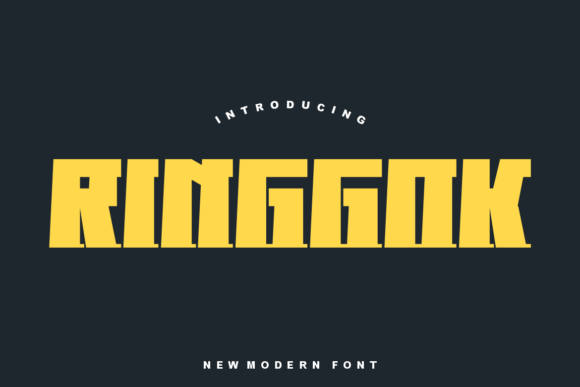
At its core, Ringgok is engineered to function as a statement piece. Unlike body fonts that prioritize readability at small sizes over long passages, display fonts like Ringgok are optimized for headlines, titles, and short bursts of text where character and personality take precedence. The design language of Ringgok leans heavily into geometric precision while maintaining enough organic variation to feel human and approachable. This balance is crucial in modern branding, where audiences are increasingly skeptical of overly sterile or generic aesthetics.
The "authentic" quality often attributed to Ringgok stems from its stroke weight and terminal details. It avoids the trap of being merely thick; instead, it utilizes counterforms and spacing to create a sense of depth and stability. When evaluated against current typographic trends, Ringgok aligns well with the shift toward maximalist yet structured designs. It does not shout for attention in a chaotic manner but rather commands respect through confident proportions. For professionals seeking a font that feels established and reliable, Ringgok provides a foundation that supports serious brand narratives.
Key Characteristics and Visual Strengths
When analyzing the technical attributes of Ringgok, several key characteristics stand out as defining features of its performance. The most prominent is its bold weight, which ensures legibility even when scaled down slightly for packaging or used in environments with high visual competition. However, true usability comes from how the font handles negative space. The internal counters—the enclosed spaces within letters—are generous enough to prevent the glyphs from feeling cramped, a common issue with heavy display fonts.
- High Contrast and Readability: Despite its bold nature, the letterforms maintain distinct shapes, ensuring that words remain decipherable at a glance.
- Geometric Consistency: The uniformity across the character set allows for seamless integration into logos where symmetry and balance are paramount.
- Modern Aesthetic: The clean lines and lack of unnecessary ornamentation make it suitable for contemporary industries ranging from tech startups to lifestyle brands.
- Scalability: While primarily a display font, Ringgok retains its structural integrity across various mediums, from large billboards to social media thumbnails.
These traits combine to create a typeface that feels both timeless and current. In a practical evaluation, the font excels in scenarios where the message needs to be absorbed quickly. The visual weight of Ringgok acts as an anchor, drawing the eye immediately to the most important information on a page or product. This makes it an invaluable asset for marketers looking to increase conversion rates through stronger visual hierarchies.
Practical Applications in Real-World Projects
The theoretical strengths of a font are best understood by examining its performance in actual use cases. Ringgok has proven particularly effective in branding projects where a strong, memorable identity is required. For logo design, its bold strokes provide a solid silhouette that works well in monochrome applications, such as embossing on business cards or laser engraving on promotional items. The simplicity of the forms ensures that the logo remains recognizable even when reduced to a favicon or a mobile app icon.
Beyond static graphics, Ringgok is highly suitable for t-shirt printing and apparel design. In the realm of streetwear and corporate merchandise, typography often carries the entire visual load. Ringgok's robust structure translates exceptionally well to fabric, maintaining its shape during the printing process and resisting the blurring that can occur with thinner fonts on textured materials. Designers have found that the font pairs effectively with both minimalist layouts and complex graphic elements, offering flexibility without compromising its core identity.
Furthermore, in digital marketing contexts, Ringgok serves as an excellent choice for call-to-action buttons, hero section headlines, and social media banners. Its commanding presence helps guide user behavior by highlighting critical actions. For example, a headline written in Ringgok on a landing page naturally directs the viewer's focus, reducing cognitive load and encouraging engagement. This practical utility extends to editorial design as well, where it can be used for chapter headings or feature stories that require a distinct separation from the body text.
Evaluating Usability and Workflow Integration
For professionals managing tight deadlines and diverse project requirements, the ease of integration is just as important as the visual appeal. Ringgok is designed with usability in mind, featuring a comprehensive character set that includes standard ligatures and alternate glyphs where necessary. This reduces the need for manual kerning adjustments in many situations, allowing designers to focus on layout and composition rather than micro-typography.
The font's consistency across different platforms is another significant advantage. Whether installed locally on a desktop publishing suite or embedded in web projects via variable font technology, Ringgok renders reliably. This reliability minimizes the risk of cross-platform discrepancies, a common frustration in collaborative workflows involving multiple stakeholders. For freelancers and small agencies, this consistency means less time spent troubleshooting rendering issues and more time delivering high-quality results.
However, it is important to acknowledge the limitations inherent to any display font. Ringgok is not intended for body copy or long-form reading. Using it for paragraphs of text would result in poor readability and visual fatigue. Its value lies strictly in its role as a headline or accent typeface. Understanding this boundary is essential for maximizing its effectiveness. When paired with a complementary sans-serif or serif font for body text, Ringgok creates a harmonious hierarchy that enhances the overall communication strategy.
Who Benefits Most from Ringgok?
While Ringgok offers broad appeal, certain groups of professionals will find it particularly aligned with their goals. Entrepreneurs launching new ventures often need a font that conveys confidence and stability immediately. Ringgok fulfills this need by providing a look that feels established and trustworthy. Similarly, creators in the fashion and lifestyle sectors benefit from its modern edge, which resonates well with younger demographics while retaining enough sophistication for broader appeal.
Marketers and advertisers also stand to gain from incorporating Ringgok into their campaigns. Its ability to capture attention quickly makes it ideal for paid media, where split-second decisions determine success. Educators and publishers looking to create engaging course materials or book covers may also find its bold aesthetic useful for breaking up dense content and signaling key sections.
Ultimately, Ringgok is a strategic choice for anyone prioritizing clarity and impact. It is not a trendy novelty that will fade in a season but a functional tool built to withstand the rigors of professional application. By selecting Ringgok, designers and brand owners are investing in a typeface that delivers consistent performance across a wide range of contexts, ensuring that their message is not just seen, but felt.