Evaluating Moon Summer: A Guide to the Handwritten Display Typeface
In the expansive landscape of digital typography, selecting the right typeface is often a balancing act between aesthetic appeal and functional utility. Moon Summer has emerged as a notable option within the handwritten display category, offering a distinct visual style that blends whimsy with readability. For designers, hobbyists, and creators looking to infuse their projects with a sense of warmth and approachability, understanding the specific characteristics and limitations of this font is essential before integrating it into a workflow.
Understanding the Design Philosophy of Moon Summer
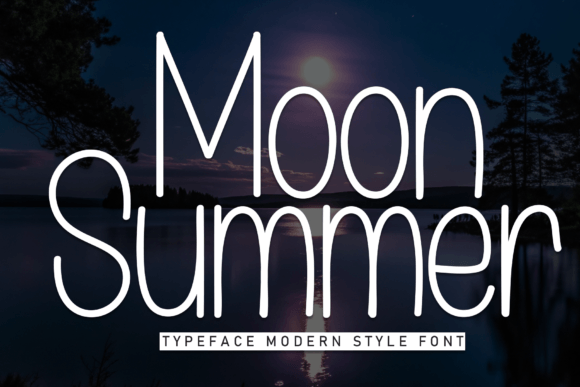
Moon Summer is classified as a handwritten display font, a category characterized by letterforms that mimic natural penmanship rather than rigid geometric construction. The design intent behind Moon Summer is to evoke feelings of friendliness and simplicity. Unlike formal serif or sans-serif typefaces designed for corporate communication, Moon Summer utilizes organic curves, varying stroke widths, and a slightly irregular baseline to simulate the human touch of a hand-written note.
The "display" classification is a critical technical detail. This designation indicates that the font is optimized for use at larger sizes, such as headlines, titles, and short phrases, rather than for extended blocks of body text. The characters are crafted to stand out visually, making them ideal for capturing attention quickly. When evaluating Moon Summer, it is important to recognize that its charm lies in its ability to soften the tone of a message, wrapping words in a layer of sweetness that can make a project feel more personal and inviting.
Key Use Cases and Strong Fits
Identifying the appropriate context for a typeface is the first step in effective design. Moon Summer excels in scenarios where the primary goal is to convey emotion, playfulness, or intimacy. Several specific applications align well with its design attributes:
- Wedding Invitations and Stationery: The friendly nature of the script makes it a popular choice for wedding-related materials. It works particularly well for names, dates, and short welcome messages on invitations, adding a romantic and personalized flair without the stiffness of traditional calligraphy.
- Greeting Cards and Personal Notes: For heartfelt cards, birthday wishes, or thank-you notes, Moon Summer mimics the look of a genuine handwritten message. This can enhance the perceived sincerity of the sentiment being conveyed.
- Branding for Lifestyle and Creative Businesses: Small businesses in sectors like baking, boutique clothing, children's products, or wellness services often benefit from a softer brand voice. Using Moon Summer for logos or social media headers can help establish a brand identity that feels accessible and community-focused.
- Decorative Headlines: In web design or print layouts, using Moon Summer for section headers can break up the monotony of standard fonts, guiding the reader's eye while maintaining a cohesive, lighthearted theme.
Benefits and Practical Advantages
When considering Moon Summer for a project, several practical benefits become apparent. The most significant advantage is its immediate emotional resonance. Because the font resembles handwriting, it lowers the barrier between the creator and the audience, fostering a sense of connection. This is particularly valuable in marketing materials where building trust and rapport is a priority.
Furthermore, the versatility of the character set allows for creative flexibility. While it is a display font, its legibility remains relatively high compared to highly stylized scripts. This means that even at moderately large sizes, the text remains decipherable, reducing the risk of miscommunication. The font's structure also tends to work well in monochrome settings, making it adaptable for various color palettes without requiring complex adjustments.
Tradeoffs and Limitations to Consider
Despite its strengths, Moon Summer is not a universal solution. A balanced evaluation requires acknowledging its tradeoffs. The primary limitation is its unsuitability for long-form reading. Due to the irregular spacing and stylistic flourishes inherent in handwritten styles, using Moon Summer for paragraphs of body text can lead to reader fatigue and reduced comprehension. The eye struggles to track lines of text when the letters vary significantly in size and slant.
Additionally, the playful nature of the font may clash with contexts requiring authority, seriousness, or formality. In industries such as law, finance, or medical reporting, the casual aesthetic of Moon Summer could undermine the credibility of the content. It is crucial to consider the psychological impact of the typeface; if the goal is to project stability and rigor, a more structured sans-serif or serif font would be a safer choice.
Another consideration is scalability. As a display font, Moon Summer may lose clarity when scaled down to very small sizes. If a design requires the same font to be used for both a large headline and fine print details, the results may be inconsistent. Designers must ensure they have sufficient resolution and space to render the font effectively.
When to Consider Alternatives
Determining when to look beyond Moon Summer is just as important as knowing when to use it. Alternatives should be considered if the project demands high legibility across multiple font sizes or if the target audience expects a professional, corporate tone. For instance, if you are designing a brochure with dense informational content, pairing Moon Summer with a highly readable serif or sans-serif for the body text is necessary, or choosing a different primary font entirely.
If the design requires a wide range of weights (light, regular, bold, black) to create hierarchy, Moon Summer may fall short, as many handwritten display fonts come in limited weight variations. In such cases, a variable font or a comprehensive type family might offer better structural control. Furthermore, if accessibility is a primary concern, particularly for users with dyslexia or visual impairments, the irregular shapes of handwritten fonts can sometimes pose challenges compared to clean, uniform typefaces.
Decision-Making Insights for Selection
To determine if Moon Summer aligns with your specific goals, apply the following decision-making framework:
- Define the Message Tone: Does the content require warmth and playfulness? If yes, Moon Summer is a strong candidate. If the tone needs to be neutral or authoritative, explore other options.
- Analyze Text Volume: Will the font be used for short headlines only, or for longer passages? Reserve Moon Summer for short, impactful text segments to maintain readability.
- Test Readability: Before finalizing a design, print a sample or view it on the intended device at actual size. Ensure that the unique features of the font do not hinder quick comprehension.
- Check Compatibility: Evaluate how Moon Summer pairs with secondary fonts. A good combination often involves contrasting styles, such as pairing the whimsical Moon Summer with a clean, minimal sans-serif for supporting text.
Ultimately, the value of Moon Summer lies in its ability to add a specific emotional texture to a design. By understanding its strengths as a display font and respecting its limitations regarding length and formality, creators can utilize it effectively to craft designs that are both engaging and functional. Whether for a wedding invitation or a boutique logo, the font serves best when applied with intention and an awareness of the broader design context.