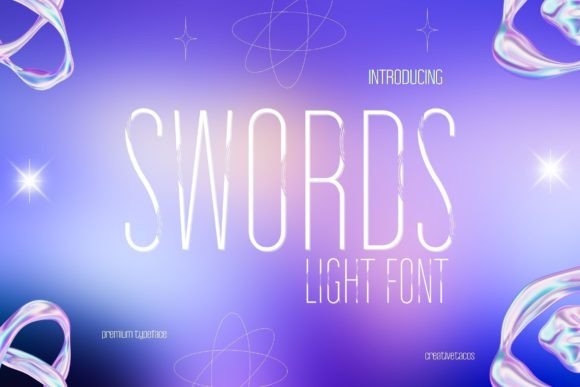
Swords Light Font: A Design Evaluation
In the landscape of contemporary digital typography, the demand for typefaces that bridge the gap between organic fluidity and technological precision is growing. Swords Light Font emerges as a specific response to this need, positioning itself within the realm of futuristic and advanced design aesthetics. This article provides an objective evaluation of the typeface, analyzing its structural characteristics, appropriate use cases, and the practical considerations designers must weigh when integrating it into their workflows.
Understanding the Structural Identity of Swords
Swords is defined by its unique combination of sharp geometric lines and subtle, wave-like details. Unlike traditional sans-serif fonts that prioritize uniform stroke width or purely mechanical construction, Swords introduces a sense of motion through its engraved aesthetic. The "Light" weight variant specifically offers reduced stroke thickness, which enhances readability in larger display sizes while maintaining a delicate balance between form and function.
The defining characteristic of this typeface is its "futuristic aura," achieved not through excessive ornamentation but through precise line work. The smooth curves and crisp edges create a visual texture that suggests speed and advancement. This structural identity makes it distinct from standard modernist fonts, offering a more dynamic alternative for projects requiring a high-tech or science fiction narrative.
Key Reasons for Consideration
Designers typically explore Swords when they require a typeface that communicates innovation without sacrificing legibility. The primary reasons for selecting this font include:
- Aesthetic Alignment with Tech Themes: The inherent futuristic quality of the font aligns naturally with industries such as software development, robotics, aerospace, and gaming.
- Visual Distinctiveness: In crowded digital spaces, the wave details provide a unique signature that helps brands stand out from competitors using generic geometric sans-serifs.
- Versatility in Display Contexts: The light weight allows for elegant scaling, making it suitable for both minimalist interfaces and bold, large-scale titles.
For professionals working on branding exercises where the goal is to project a forward-thinking image, Swords offers a pre-engineered solution that reduces the time spent on custom lettering adjustments.
Benefits and Practical Advantages
The primary benefit of incorporating Swords Light Font into a design system is its ability to convey sophistication through minimalism. The clean lines ensure that the typeface remains unobtrusive in user interface (UI) elements, while the subtle wave details add character to headlines and logos. This duality allows designers to maintain a cohesive look across different touchpoints, from mobile applications to web banners.
Furthermore, the precision of the font's construction supports high-resolution rendering. On modern Retina displays and 4K monitors, the fine details of the engraving style remain sharp, avoiding the blurring issues often associated with very thin typefaces at small sizes. This technical reliability is crucial for digital-first brands that require consistent visual quality across various devices.
Tradeoffs and Limitations
While Swords offers significant aesthetic advantages, it is not without limitations. The most notable tradeoff lies in its legibility at smaller point sizes. The "Light" weight, combined with intricate wave details, can reduce clarity when used for body text or long-form content. In print media, particularly on lower-quality paper stocks, the fine strokes may appear broken or faint.
Additionally, the specialized nature of the font means it may not fit every brand voice. The futuristic and sharp aesthetic can feel cold or overly aggressive for industries focused on warmth, tradition, or human-centric care, such as healthcare, non-profits, or artisanal crafts. Using Swords in these contexts could create a dissonance between the visual message and the brand's core values.
Considerations for Implementation
When deciding to use Swords, designers should consider the following factors:
- Contextual Hierarchy: Reserve the font for headers, logos, and short captions. Pair it with a highly legible, neutral sans-serif for body copy to ensure accessibility.
- Color Contrast: Due to the light weight, high contrast between the text and background is essential. Avoid placing light gray Swords text on white backgrounds, as this compromises readability.
- Screen vs. Print: Evaluate the output medium carefully. While excellent for screens, printed materials may require testing to ensure the fine details do not get lost during the printing process.
Ideal Scenarios for Application
Swords Light Font finds its strongest footing in environments where technology and future-oriented concepts are central. It is an ideal choice for:
- Science Fiction Media: Titles for films, video games, or novels set in futuristic worlds benefit from the font's engraved, advanced edge.
- Tech Branding: Startups and established tech companies looking to refresh their visual identity with a sharper, more modern look.
- Digital Interfaces: Dashboard headers, navigation menus, and call-to-action buttons in software applications where a sleek, professional appearance is required.
- Event Typography: Conference signage and promotional materials for technology summits or innovation expos.
In these scenarios, the font acts as a visual shorthand, instantly communicating the theme of progress and precision to the audience.
When to Consider Alternatives
There are specific situations where alternatives to Swords may be more appropriate. If a project requires extensive blocks of text, a standard serif or a robust sans-serif family with better x-height and open counters will serve the reader better. Similarly, if the brand identity relies on organic, hand-crafted, or rustic qualities, the mechanical precision of Swords will likely clash with the intended emotional tone.
Furthermore, for audiences with visual impairments, the thin strokes of the Light variant may pose accessibility challenges. In cases where inclusivity and universal design are paramount, a bolder weight or a font designed specifically for accessibility should be prioritized over the stylistic flair of Swords.
Decision-Making Insights
To determine if Swords Light Font aligns with your specific goals, evaluate your project against three criteria: context, scale, and audience. First, does the subject matter benefit from a futuristic or high-tech association? Second, will the font primarily be used in large display sizes rather than dense paragraphs? Finally, does the target audience appreciate sleek, modern aesthetics?
If the answer to these questions is affirmative, Swords offers a compelling tool for elevating visual communication. However, if the project demands maximum legibility across all mediums or requires a warmer, more traditional tone, exploring other typeface categories would be a more prudent strategic move. By understanding both the strengths and the constraints of this typeface, designers can make informed decisions that enhance their projects without compromising usability.