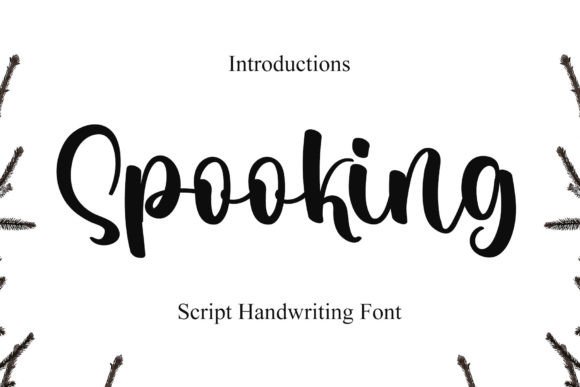
Spooking: A Refined Script Font for Sophisticated Design Workflows
In the realm of digital typography, few assets bridge the gap between playful character and high-end elegance as effectively as Spooking. This chic, refined script font emanates a sense of sophistication that is often difficult to achieve with standard calligraphy styles. Unlike generic handwriting fonts that can feel disjointed or overly casual, Spooking is engineered with a level of detail that makes it an incredibly feature-rich tool for professionals. Its stylish alternates and ligatures are not merely decorative; they are functional components that allow designers to craft bespoke headlines, logos, and branding elements that stand out in crowded markets. For creatives, marketers, and business owners looking to elevate their visual communication, understanding how to integrate Spooking into a broader design process is essential for maximizing its potential.
Understanding the Role of Spooking in Visual Strategy
Before diving into the technical implementation, it is crucial to define where Spooking fits within a larger creative strategy. Typography is rarely an isolated decision; it is the culmination of brand identity, audience expectations, and project goals. Spooking serves as a powerful accent element rather than a body text solution. Its intricate curves and sophisticated strokes demand attention, making it ideal for headers, invitations, luxury packaging, and editorial titles. When planning a project, the decision to use a script font like Spooking should be made early in the conceptual phase. It influences the layout, the choice of complementary sans-serif or serif fonts, and even the color palette of the final deliverable.
The value of Spooking lies in its ability to convey emotion through form. In a workflow focused on branding, for instance, selecting this font signals a commitment to quality and refinement. It suggests that the brand behind the message is established, thoughtful, and attentive to detail. However, because of its complex nature, it requires careful handling. Using Spooking without a clear plan can lead to legibility issues or a cluttered aesthetic. Therefore, the integration of this font must be approached with the same rigor as any other critical business asset. It is not just about picking a style from a dropdown menu; it is about curating a visual voice that resonates with the intended demographic.
Pre-Project Planning and Asset Preparation
Successful implementation begins long before the first letter is typed. The preparation phase involves assessing the specific needs of the project and determining if Spooking aligns with those requirements. For a wedding planner designing an invitation suite, the font's elegance is a primary selling point. For a tech startup creating a logo, the decision might be more nuanced, requiring a balance between modernity and the classic feel of a script. During this stage, designers should gather all necessary context, including brand guidelines, competitor analysis, and target audience demographics.
A critical part of preparation is ensuring software compatibility. Spooking is a feature-rich font, meaning it relies heavily on OpenType capabilities such as stylistic sets, contextual alternates, and ligatures. To utilize these features, the design environment must support them. Industry-standard tools like Adobe Illustrator, Photoshop, InDesign, and Canva (with specific version checks) are typically required. Before purchasing or licensing the font, verify that your current software stack can render the full range of characters and variations. This step prevents frustration later in the workflow when you discover that a specific alternate glyph is inaccessible or that the font does not embed correctly for web use.
Organization is another key factor during the pre-project phase. If you are managing multiple clients or projects, establishing a systematic file structure for your typography assets is vital. Store the Spooking font files in a dedicated directory, separate from your working project files, to ensure easy access and backup. Additionally, create a style guide draft that outlines how Spooking will be used. Will it be used exclusively for headlines? Will it be paired with a specific geometric sans-serif? Documenting these decisions early ensures consistency across all team members and stakeholders, reducing the likelihood of ad-hoc changes that could compromise the design's integrity.
Executing the Design: Leveraging Alternates and Ligatures
Once the planning phase is complete and the environment is set up, the execution phase begins. This is where the true power of Spooking comes to life. The font's stylish alternates and ligatures are designed to mimic the natural flow of hand-lettering while maintaining the precision of digital type. In practice, this means that the same letter "a" can appear differently depending on its position in a word or its surrounding characters. Utilizing these features transforms a static string of text into a dynamic composition.
To get the most out of Spooking, designers should actively engage with the OpenType panels in their software. Instead of accepting the default glyphs, explore the stylistic sets to find variations that better suit the rhythm of the word. For example, a capital letter at the start of a headline might benefit from a swash alternate that extends elegantly to the left, creating a visual anchor. Ligatures, which connect two or more letters into a single glyph, are particularly useful for smoothing out transitions between characters. In a name like "Spooking," the connection between the 'k' and the 'i' can be significantly improved by activating the appropriate ligature, resulting in a more fluid and professional appearance.
Efficiency in this stage comes from mastering keyboard shortcuts and panel navigation. Rather than manually searching for every alternate, learn to toggle between stylistic sets quickly. This allows for rapid iteration, enabling you to test different combinations of characters to see which arrangement creates the best visual balance. It is also important to consider spacing and kerning. Because script fonts have varying stroke widths and ascenders/descenders, automatic spacing often falls short. Manually adjusting the space between letters ensures that the text reads clearly and maintains its sophisticated aesthetic. This attention to detail is what separates a good design from a great one.
Integration with Other Tools and Platforms
Spooking does not exist in a vacuum; it must interact seamlessly with other elements of the design ecosystem. Whether you are working on print materials, digital advertisements, or web interfaces, the font must adapt to various mediums. In a print workflow, consider the paper stock and ink coverage. The fine details of Spooking may require high-resolution printing to prevent blurring or loss of texture. For digital applications, ensure that the font is optimized for screen rendering. Web-safe formats like WOFF2 are essential for maintaining performance and visual fidelity on websites.
Collaboration is another aspect of integration. When working with a team, ensure that everyone has access to the licensed version of Spooking. Cloud-based collaboration tools often struggle with custom fonts, so it is advisable to export designs as PDFs or rasterized images for review purposes. If the project involves motion graphics or video, check if the font supports animation-friendly features. Some script fonts look awkward when animated due to irregular entry and exit points, but Spooking's refined construction generally handles movement well, provided the animator respects the natural flow of the strokes.
Furthermore, Spooking interacts with other typographic choices in a hierarchy. It works best when paired with clean, neutral fonts that do not compete for attention. A bold sans-serif or a classic serif can provide a stable foundation, allowing Spooking to shine as the focal point. This contrast creates a balanced visual hierarchy that guides the viewer's eye through the content. Testing these pairings in mockups before finalizing the design helps identify any clashes in weight, x-height, or mood.
Quality Control and Long-Term Usability
As the project nears completion, rigorous quality control becomes paramount. Review the design at various sizes to ensure that Spooking remains legible and aesthetically pleasing. Zoom in to inspect the edges of the glyphs for any pixelation or rendering artifacts. Check the ligatures and alternates again to confirm they are functioning as intended across different words and phrases. Consistency is key; ensure that the font is applied uniformly throughout the document or campaign.
Long-term usability involves considering how the font will age with your brand. Trends in typography shift, but a refined script like Spooking tends to have a timeless quality. However, it is still wise to evaluate whether the font aligns with future brand directions. If your brand is evolving towards a more minimalist or industrial aesthetic, Spooking might eventually need to be retired. Conversely, if the goal is to maintain a legacy of elegance, investing in this font is a strategic move. Regularly auditing your typography library ensures that you are using assets that continue to serve your business goals effectively.
Practical Workflow Examples
To illustrate the practical application of Spooking, consider a few common scenarios. A boutique hotel chain might use Spooking for their annual gala invitations, leveraging its elegant alternates to create a sense of exclusivity. In this case, the workflow would involve close collaboration with a printer to ensure the fine details are captured perfectly. A freelance graphic designer might incorporate Spooking into a logo for a high-end skincare line, using ligatures to connect the brand name into a cohesive symbol. Here, the focus would be on scalability and versatility across packaging and social media.
For an educator creating course materials, Spooking could be used for chapter headings in a premium workbook, adding a touch of personality to an otherwise academic layout. The key is restraint; using the font sparingly ensures it retains its impact. Similarly, a small business owner launching a new product line might use Spooking for the tagline on their website, pairing it with a clean sans-serif for the main navigation. This combination communicates both professionalism and approachability.
By integrating Spooking thoughtfully into these workflows, professionals can achieve results that are not only visually stunning but also strategically sound. The font's feature-rich nature offers endless possibilities for customization, allowing creators to tailor the output to their specific needs. Whether you are a seasoned designer or a productivity-minded entrepreneur, understanding the nuances of Spooking empowers you to make informed decisions that enhance the quality of your work. Ultimately, the goal is to create designs that resonate with audiences and reflect the sophistication of the brand they represent.