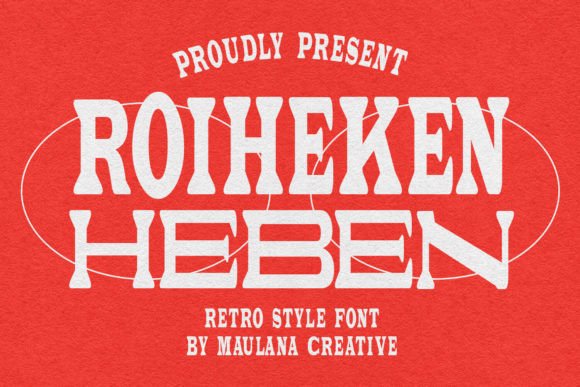
Roiheken Heben: A Retro Serif Font for Bold Design
In the crowded landscape of digital typography, finding a typeface that balances vintage charm with modern readability is often a challenge. Roiheken Heben emerges as a compelling solution for designers seeking a distinct voice without sacrificing clarity. This retro serif style font captures the essence of mid-century editorial design while offering the flexibility required for contemporary projects. Its medium-low contrast strokes and carefully crafted details make it an ideal choice for everything from intricate logo marks to extended body copy.
The true power of Roiheken Heben lies in its versatility. Unlike many display fonts that are limited to headlines, this typeface maintains legibility across various sizes and contexts. Whether you are crafting a movie title sequence, designing a book cover, or establishing a brand identity, Roiheken Heben provides a solid foundation. It invites creators to explore the intersection of nostalgia and functionality, allowing them to produce work that feels both timeless and fresh.
Understanding the Character of Roiheken Heben
To utilize Roiheken Heben effectively, one must first appreciate its structural nuances. The font is defined by its medium-low contrast stroke weight. This means the difference between the thick and thin parts of the letterforms is subtle yet present. This characteristic gives the text a sturdy, grounded appearance that commands attention without appearing overly decorative or fragile.
This structural integrity is what makes the font suitable for both short bursts of text and longer passages. In many retro designs, high-contrast serifs can become difficult to read at smaller sizes or on low-resolution screens. Roiheken Heben avoids this pitfall, ensuring that your message remains clear whether it is printed on a business card or displayed on a mobile device. The vintage character is achieved not through excessive ornamentation, but through the specific geometry of the curves and the angle of the serifs.
Furthermore, the inclusion of ligatures and alternate glyphs adds a layer of sophistication that sets it apart from standard web fonts. Ligatures are special characters that join two or more letters together to improve spacing and visual flow. In Roiheken Heben, these connections create a seamless reading experience, particularly in headings where letter pairs like "fi" or "fl" might otherwise look disjointed. Alternates allow designers to swap out specific characters for unique variations, adding personality to logos and titles without needing to manually edit vector shapes.
Creative Applications for Branding and Identity
For entrepreneurs and small business owners, a logo is often the first point of contact with a potential customer. Roiheken Heben serves as an excellent primary or secondary font for logo design. Its retro aesthetic evokes a sense of tradition and reliability, which is particularly beneficial for brands in the food and beverage industry, artisanal crafts, or boutique retail sectors.
When designing a logo, consider using the alternates to create a unique monogram or to highlight a specific word in your brand name. For example, a coffee shop could use the font's bold weight for the main name and pair it with a delicate sans-serif for the tagline. This combination creates a visual hierarchy that guides the viewer's eye while maintaining a cohesive style. The font's ability to stand alone makes it perfect for single-word logos, while its readability ensures it works well when paired with other elements.
Social media presence is another area where Roiheken Heben shines. In a feed dominated by minimalist sans-serifs, a post featuring this retro serif immediately stands out. Use it for quote graphics, event announcements, or promotional banners. The font's strong character helps convey authority and creativity simultaneously. When creating content for platforms like Instagram or Pinterest, ensure there is sufficient negative space around the text to let the serifs breathe. This prevents the design from feeling cluttered and enhances the overall elegance of the composition.
Narrative Power in Publishing and Media
The entertainment and publishing industries rely heavily on typography to set the mood before a single word is read. Roiheken Heben is exceptionally well-suited for movie titles and book covers. Its vintage vibe can instantly transport an audience to a specific era, making it a go-to choice for period dramas, historical fiction, or noir thrillers.
For book designers, the font offers a dual advantage. It works beautifully as a display font for the title on the cover, drawing the reader in with its distinctive shape. Simultaneously, its readability allows it to be used for chapter headings or even body text in shorter publications like zines or pamphlets. When setting long text, pay attention to leading (line height). Because the font has medium-low contrast, slightly increasing the line spacing can improve readability and give the text a more airy, sophisticated feel.
Movie title sequences also benefit from the font's dynamic capabilities. By utilizing the ligatures and alternates, motion graphic designers can create fluid animations where letters interact with each other. The sturdy structure of the font ensures that it remains legible even when moving quickly across the screen. This makes it a practical choice for opening credits that need to establish a tone quickly and effectively.
Pairing Strategies for Harmonious Designs
While Roiheken Heben is robust enough to stand alone, pairing it with complementary typefaces can elevate a design project. The key to successful pairing is contrast. Since Roiheken Heben is a serif font with a distinct personality, it pairs exceptionally well with clean, neutral sans-serif fonts. A geometric sans-serif like Futura or a humanist sans-serif like Gill Sans can provide a modern counterbalance to the vintage nature of the serif.
Alternatively, if you wish to maintain a classic, editorial look, pairing Roiheken Heben with another serif font can work, provided the weights and styles are distinct. For instance, use Roiheken Heben for headlines and a lighter, higher-contrast serif for body text. This approach creates a unified aesthetic that feels curated and professional. Avoid pairing it with other highly decorative display fonts, as this can lead to visual competition and reduce overall legibility.
When working with secondary text, such as captions or footnotes, keep the size consistent and ensure the color contrast meets accessibility standards. The goal is to support the main content without distracting from it. Roiheken Heben's versatility allows it to function seamlessly in these supporting roles, ensuring that every element of your design contributes to a cohesive whole.
Practical Tips for Implementation
- Test Readability: Always preview your design at various scales. What looks good on a large monitor may lose detail on a smartphone screen.
- Leverage Alternates: Don't hesitate to use the alternate characters to add uniqueness to your headers and logos.
- Control Spacing: Adjust kerning and tracking manually for headlines to ensure the letterforms sit comfortably together.
- Maintain Hierarchy: Use font weight and size differences to clearly distinguish between titles, subtitles, and body text.
- Consider Context: Ensure the vintage style aligns with your brand's message and target audience expectations.
Ultimately, Roiheken Heben is more than just a collection of characters; it is a tool for storytelling. Its blend of retro aesthetics and functional design empowers creators to craft visuals that resonate with audiences on an emotional level. Whether you are launching a new product, writing a novel, or building a personal brand, this font offers the stability and style needed to make a lasting impression. By understanding its strengths and applying it with intention, you can create stunning work that stands the test of time.